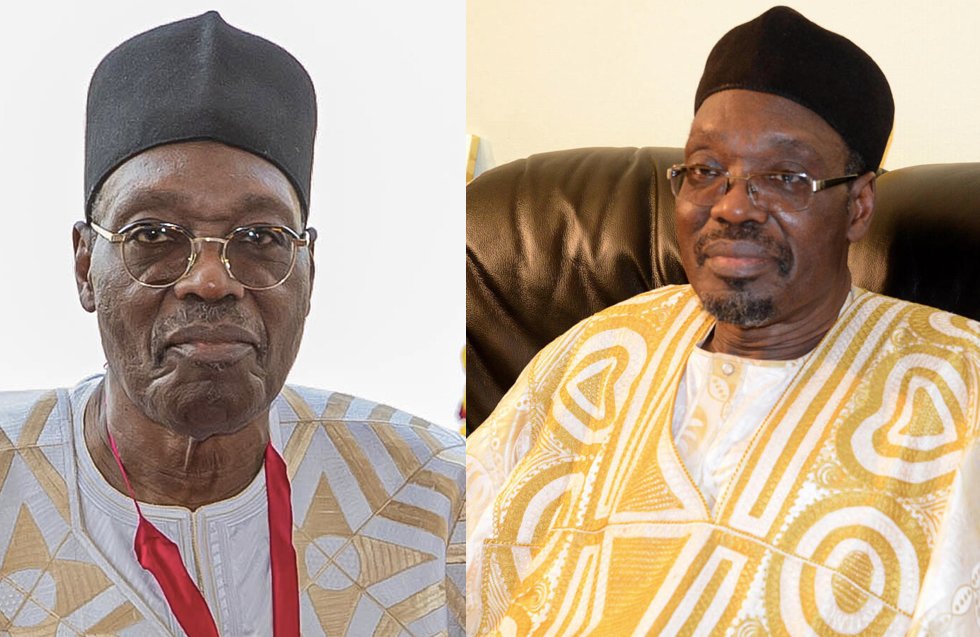
James Omotosho biography reveals the controversial Federal High Court judge presiding over Nnamdi Kanu’s trial and high-profile political cases in Nigeria.
Who is Justice James Kolawole Omotosho?
Justice James Kolawole Omotosho is a Nigerian judge serving at the Federal High Court in Abuja, who has emerged in November 2025 as one of the most controversial figures in Nigeria’s judiciary.
The James Kolawole Omotosho biography begins on 21 July 1966, when he was born in Ajegunle, Lagos State. Originally from Ijemo-Abeokuta in Ogun State, Justice Omotosho became a household name in Nigeria throughout 2025 due to his handling of several high-profile and politically sensitive cases.
Since his appointment to the Federal High Court on 12 February 2015, Justice Omotosho has presided over matters involving national security, political disputes, terrorism charges, and internal party battles. His rulings in 2025 have attracted unprecedented national attention, with his 20 November 2025 judgement in the Nnamdi Kanu terrorism trial sparking immediate controversy and calls for appellate review.
In November 2025, Justice Omotosho delivered a highly anticipated judgement in the terrorism trial of Nnamdi Kanu, leader of the Indigenous People of Biafra (IPOB), ruling that Kanu has a case to answer despite what critics described as glaring inconsistencies in the prosecution’s evidence. This ruling in one of Nigeria’s longest-running and most politically sensitive court cases has sparked renewed controversy and calls for appellate review. His continued involvement in Rivers State political crisis cases and party leadership disputes throughout 2025 has made him an increasingly controversial figure, with accusations ranging from judicial overreach to alleged partisanship.
Justice Omotosho’s judicial career exemplifies the complex intersection of law and politics in Nigeria. Whether praised for judicial efficiency or criticised for alleged bias, he remains one of the most closely watched judges in the Federal High Court system.
Justice James Kolawole Omotosho Profile Summary
| Personal Information | Details |
|---|---|
| Full Name | James Kolawole Omotosho |
| Title | Honourable Justice |
| Date of Birth | 21 July 1966 |
| Age | 59 years old (as of November 2025) |
| Place of Birth | Ajegunle, Lagos State, Nigeria |
| State of Origin | Ogun State |
| Hometown | Ijemo-Abeokuta, Abeokuta South LGA |
| Nationality | Nigerian |
| Tribe/Ethnicity | Yoruba |
| Religion | Christianity |
| Occupation | Federal High Court Judge |
| Current Posting | Federal High Court, Abuja Division |
| Date of Appointment | 12 February 2015 |
| Years on Bench | 10 years (2015–present) |
| Marital Status | Married |
| Spouse | Mrs J.K. Omotosho |
| Children | Sons and daughters (names undisclosed) |
| Education | LLB (Second Class Lower), Olabisi Onabanjo University (1996); B.L. (1997); NCE Economics/Business Management |
| Called to Bar | 1997 |
| Net Worth | Estimated $7 million |
| Notable Cases | Nnamdi Kanu trial (Nov 2025 ruling), Rivers State emergency rule cases (2025), APGA leadership dispute, Philip Shaibu reinstatement |
| Recent Controversies | “Be grateful” statement (Oct 2025), Kanu ruling (Nov 2025), alleged partisanship, jurisdictional overreach |
Early Life and Family Background
James Kolawole Omotosho was born on 21 July 1966 in Ajegunle, a densely populated area of Lagos State known for its vibrant but challenging socio-economic environment.
Origins and Ethnicity
Though born in Lagos, Justice Omotosho hails from Ijemo-Abeokuta in Abeokuta South Local Government Area of Ogun State. He belongs to the Yoruba ethnic group and was raised in a Christian household.
Growing up in Ajegunle during the 1970s and 1980s exposed him to the realities of urban poverty and struggle. This background would later inform his understanding of social justice issues.
Family Structure
Justice Omotosho’s parents are Mr. and Mrs. Omotosho, both Christians from Ogun State. Limited information is publicly available about his siblings or extended family, as he maintains privacy regarding personal family matters.
He is married to Mrs J.K. Omotosho, described as a career woman. The couple has been blessed with children—both sons and daughters—though their names and specific details remain private. The family reportedly maintains a low profile despite Justice Omotosho’s high-visibility judicial role.
Early Environment
Ajegunle, where Justice Omotosho grew up, is one of Lagos’s most populous communities. The area is known for producing notable Nigerians who overcame challenging circumstances to achieve success. Growing up there likely instilled resilience and determination that would serve him throughout his legal career.
Education Background
Justice Omotosho’s educational journey reflects steady progression from primary school in Lagos to legal qualification.
Primary Education
He attended Local Authority Primary School in Lanyeni, Ajegunle, Lagos, from 1973 to 1980. There, he obtained his First School Leaving Certificate, demonstrating early academic promise.
Secondary Education
For his secondary education, Justice Omotosho attended Randle Secondary School on Pelewura Crescent in Apapa, Lagos, from 1980 to 1985. He completed his West African School Certificate (Ordinary Level) at this institution.
Teacher Training
After secondary school, Justice Omotosho pursued a National Certificate of Education (NCE) at Lagos State College of Education, Ijanikin, from 1987 to 1990. He specialised in Economics and Business Management.
This teaching qualification suggests he may have initially considered a career in education before ultimately pursuing law.
University Legal Education
Justice Omotosho studied law at Olabisi Onabanjo University (formerly Ogun State University) in Ago-Iwoye, Ogun State, from 1990 to 1996. He graduated with a Bachelor of Laws (LLB) degree, achieving a Second Class Lower Division.
The six-year duration of his law degree was standard for the programme at that time.
Law School and Bar Qualification
Following his university education, Justice Omotosho attended the Nigerian Law School at Victoria Island, Lagos, from 1996 to 1997. He successfully completed the programme and was called to the Nigerian Bar as a Barrister at Law (B.L.) in 1997.
This qualification enabled him to practice law in Nigeria and set the foundation for his eventual judicial appointment.
Legal Career Before the Bench
Private Practice
After his call to the Bar in 1997, Justice Omotosho entered private legal practice. He worked as a lawyer for several years, handling various civil and criminal matters.
During this period, he built experience in litigation, legal drafting, and courtroom advocacy. These years in private practice provided practical grounding that would prove valuable when he later became a judge.
Public Service Experience
Before his judicial appointment, Justice Omotosho also gained experience in public service roles, though specific details about these positions are not widely publicised.
His background in both private practice and public service gave him a well-rounded perspective on Nigeria’s legal system.
Preparation for the Bench
Throughout his legal career, Justice Omotosho developed expertise in various areas of law. His work ethic and legal knowledge eventually positioned him as a candidate for judicial appointment.
Appointment to the Federal High Court
The Appointment
On 12 February 2015, James Kolawole Omotosho was appointed as a judge of the Federal High Court of Nigeria. This appointment came during the administration of President Goodluck Jonathan.
The Federal High Court has exclusive jurisdiction over matters including:
- Federal government revenue
- Banking and financial institutions
- Immigration and citizenship
- Intellectual property
- Admiralty and maritime law
- Aviation
- Taxation
- Political party registration and affairs
Justice Omotosho’s appointment placed him within this critical judicial institution.
Initial Posting and Current Division
After his appointment, Justice Omotosho was eventually posted to the Abuja Division of the Federal High Court, where he currently sits. The Abuja Division handles numerous high-profile cases due to the capital city’s political significance.
His position in Abuja has meant involvement in many politically sensitive matters, as parties and governments frequently file cases in the nation’s capital.
Justice James Kolawole Omotosho Biography: High-Profile and Controversial Cases
Justice Omotosho’s judicial career has been defined by his involvement in several high-stakes cases that have attracted national and international attention.
The Nnamdi Kanu Terrorism Trial (2024-2025)
Justice Omotosho currently presides over the federal government’s terrorism case against Nnamdi Kanu, leader of the proscribed Indigenous People of Biafra (IPOB).
Background: Kanu faces multiple terrorism-related charges stemming from his advocacy for Biafran independence and alleged incitement to violence. The case began years ago under different judges before being reassigned to Justice Omotosho in 2024.
November 2025 Judgement: On 20 November 2025, Justice Omotosho delivered a highly anticipated ruling, declaring that Nnamdi Kanu “has a case to answer” despite what critics described as glaring inconsistencies in the prosecution’s evidence. The ruling means the trial will continue, with Kanu now required to enter his defence.
Immediate Reaction: Human rights lawyer Christopher Chidera immediately expressed profound concern over the ruling, stating that “this decision departs sharply from established legal principles and underscores a troubling trend of prioritising executive interests over justice in Nigeria’s courts.”
Legal Criticisms: Critics argue that Justice Omotosho fixated solely on the charge sheet whilst disregarding the prosecution’s evidence, which allegedly “collapsed under cross-examination.” Legal analysts contend the ruling violates Section 36(11) of the Nigerian Constitution, which protects against self-incrimination, by improperly shifting the burden of proof onto the accused.
Calls for Review: Following the November 2025 ruling, appeals have been made to:
- The Court of Appeal to swiftly review and rectify what critics call “egregious legal errors”
- The Nigerian Bar Association (NBA) to investigate recurring lapses in judicial adherence to law and due process
- The National Judicial Council (NJC) to examine the judge’s conduct in this case
- The international community to monitor Nigeria’s violations of fair trial standards
Current Status: As of November 2025, the case continues before Justice Omotosho, with the trial proceeding to the defence phase following his ruling. The case remains under intense national and international scrutiny.
Rivers State Emergency Rule Cases (2025)
Following heightened political tension in Rivers State in 2025, over 40 suits were filed across Abuja, Port Harcourt, and Yenagoa. Justice Omotosho handled some of the most consequential cases.
Emergency Declaration Context: President Bola Tinubu declared a state of emergency over Rivers State amidst political crisis between Governor Siminalayi Fubara and former governor Nyesom Wike. The declaration sparked numerous legal challenges.
Justice Omotosho’s Key Rulings:
- Dismissed multiple challenges to the emergency declaration for lack of locus standi
- Ruled that Section 305 of the Constitution does not mandate a specific voting method for National Assembly approval of emergency rule
- Controversially stated that voice votes could constitutionally be used for such approval
- Awarded ₦9 million in costs against plaintiff Samuel Amatonjie in Suit No. FHC/PH/CS/53/2025
The “Be Grateful” Controversy: On 22 October 2025, in delivering judgement in Suit No. FHC/PH/CS/53/2025, Justice Omotosho wrote that the plaintiff “should be grateful” that the president proclaimed emergency rule over Rivers State. This unprecedented judicial language sparked widespread condemnation from legal practitioners and commentators.
Constitutional Interpretation Questions: Justice Omotosho held that “nowhere in section 305 of the Constitution is there any specific method” for the National Assembly to reach the required two-thirds majority resolution. Critics argue this interpretation gives excessive discretion to the legislature and undermines constitutional safeguards.
September 2025 Emergency Termination: When President Tinubu terminated the emergency rule in September 2025, he acknowledged the “over 40 cases in the courts” and noted with what observers described as “presidential menace” that “some cases are still pending in the courts as of today.”
Jurisdictional Controversy: Legal analysts, including those writing in November 2025, argued that Justice Omotosho and other Federal High Court judges exceeded their jurisdiction by interfering in state governance matters that should have been handled by state courts.
Current Impact: As of November 2025, Justice Omotosho’s rulings on the Rivers State emergency continue to generate debate about the proper boundaries of federal judicial intervention in state political crises.
The APGA Leadership Dispute
Justice Omotosho presided over a high-stakes case involving leadership tussles within the All Progressives Grand Alliance (APGA).
The Ruling: His ruling touched on who was legally recognised as the party’s authentic national leadership. He directed INEC to recognise Sylvester Ezeokenwa as APGA’s National Chairman.
Accusations: APGA claimed that aspects of the dispute were already before the Court of Appeal. The party accused Justice Omotosho of issuing orders capable of pre-empting higher court decisions.
NJC Petition: APGA subsequently petitioned the National Judicial Council (NJC), alleging judicial overreach. The petition became a major national conversation about judicial boundaries in party administration.
Philip Shaibu Reinstatement Case
Justice Omotosho ruled on the reinstatement of Philip Shaibu as Deputy Governor of Edo State, a politically charged case that affected state governance.
Impact: The ruling had immediate political consequences and added to Justice Omotosho’s reputation for handling politically sensitive matters.
Rivers State Political Cases (2019-2024)
Justice Omotosho has been involved in multiple Rivers State political disputes, often involving former governor Nyesom Wike:
2019: Issued an order restraining the All Progressives Congress (APC) from presenting any candidate in Rivers State governorship election, effectively ensuring limited competition.
February 2023: Issued an order restraining the Peoples’ Democratic Party (PDP) from taking disciplinary measures against Wike on allegations of anti-party activities—notably without affording the PDP a hearing.
January 2024: Voided the Appropriations of Rivers State and issued orders restraining Governor Siminalayi Fubara from “frustrating” the Amaewhule faction of the House of Assembly loyal to Wike.
October 2024: Granted an order invalidating the proposed national convention of the PDP by restraining INEC from attending or recognising it.
Pattern Observed: Critics have noted what they describe as a consistent pattern of rulings favouring political interests associated with Wike, leading to accusations of partisanship.
Financial Crime Cases
Beyond political matters, Justice Omotosho has handled significant financial crime cases:
- Trial of former Acting Accountant General Anamekwe Nnabuoku for alleged ₦1.96 billion fraud
- ₦80 billion money laundering case involving Ali Bello and Dauda Suleiman
- Multiple cases involving “Yahoo Boys” (internet fraudsters) in Abuja
These cases demonstrate the range of his docket beyond political matters.
Career Milestones and Judicial Record
| Year | Milestone/Event | Details |
|---|---|---|
| 1966 | Birth | Born 21 July in Ajegunle, Lagos |
| 1973-1980 | Primary Education | Attended Local Authority Primary School, Ajegunle |
| 1980-1985 | Secondary Education | Randle Secondary School, Apapa, Lagos |
| 1987-1990 | Teaching Qualification | NCE in Economics/Business Management, Lagos State College of Education |
| 1990-1996 | Legal Education | LLB (Second Class Lower), Olabisi Onabanjo University |
| 1996-1997 | Law School | Nigerian Law School, Victoria Island, Lagos |
| 1997 | Call to Bar | Qualified as Barrister at Law (B.L.) |
| 1997-2015 | Legal Practice | Private practice and public service roles |
| 12 February 2015 | Judicial Appointment | Appointed Federal High Court Judge |
| 2015-Present | Federal High Court | Serving in Abuja Division |
| 2019 | APC Election Restraint | Restrained APC from fielding Rivers State governorship candidate |
| 2023 | PDP Disciplinary Case | Restrained PDP from disciplining Wike |
| 2024 | Rivers Appropriation | Voided Rivers State budget presentation |
| 2024 | Shaibu Reinstatement | Ruled on Edo Deputy Governor case |
| 2024 | Kanu Case Assignment | Assigned to preside over Nnamdi Kanu’s terrorism trial |
| January-September 2025 | Rivers Emergency Cases | Presided over multiple emergency rule challenges |
| 22 October 2025 | “Be Grateful” Ruling | Delivered controversial Rivers State emergency judgement |
| October 2025 | PDP Convention Restraint | Restrained INEC from recognising PDP national convention |
| 20 November 2025 | Kanu Judgement | Ruled that Nnamdi Kanu has case to answer; sparked national controversy |
| November 2025 | Increased Scrutiny | Faces renewed calls for NJC investigation and appellate review |
Controversies, Criticisms and Allegations
Justice Omotosho’s judicial career has been marked by significant controversy, making him one of Nigeria’s most criticised sitting judges.
Allegations of Partisanship
Rivers State Focus: Critics have repeatedly alleged that Justice Omotosho shows favouritism in cases involving Nyesom Wike and Rivers State politics. The consistent pattern of rulings favouring Wike-aligned interests has raised questions about judicial impartiality.
Opposition Restraints: His orders restraining opposition parties from participating in elections or preventing parties from internal discipline have been characterised as interfering with democratic processes.
Jurisdictional Overreach Claims
State vs Federal Matters: Legal analysts have argued that Justice Omotosho sometimes exceeds Federal High Court jurisdiction by interfering in state government matters that should be handled by state courts.
Emergency Rule Cases: Critics contended that several of his rulings on Rivers State emergency rule went beyond the Federal High Court’s constitutional mandate.
Ex Parte Orders Without Hearing
Procedural Concerns: Justice Omotosho has been accused of granting ex parte orders (orders given without hearing opposing parties) too readily, particularly in politically sensitive cases.
Due Process Questions: Legal practitioners have questioned whether affected parties receive adequate opportunity to present their cases before consequential orders are issued.
NJC Petitions and Investigations
Multiple Complaints: Various groups have petitioned the National Judicial Council (NJC) regarding Justice Omotosho’s conduct:
- APGA’s petition alleging judicial overreach in their leadership dispute
- Benue Coalition for Democracy’s call for investigation into alleged impunity
- Nigerians in the United Kingdom Monitoring Council (NUK-MC) urging investigation of alleged partisanship
Delayed CTCs: Accusations have been made regarding delays in releasing Certified True Copies (CTCs) of judgements, which can affect parties’ ability to appeal.
The “À La Carte Law” Criticism
In a detailed critique titled “James Omotosho: A Judge and His À La Carte Law,” legal commentators accused Justice Omotosho of crafting rulings tailored to political interests rather than consistent legal principles.
Constitutional Interpretation: Critics argued that his interpretation of Section 305 (emergency rule provisions) was unconventional and politically convenient rather than legally sound.
Costs Awards: His award of ₦9 million in costs against a plaintiff in an emergency rule case was described as excessive and punitive, seemingly designed to discourage challenges to executive action.
Professional Reputation Impact
These controversies have divided opinion on Justice Omotosho:
Supporters’ View: Some argue he demonstrates judicial efficiency, avoids procedural delays, and makes firm decisions in difficult circumstances.
Critics’ View: Others contend he has compromised judicial independence, serves executive and political interests, and damages public confidence in the judiciary.
Recent Forgery Allegations
In late 2024, serious allegations emerged regarding Justice Omotosho’s conduct in Suit No FHC/ABJ/CS/835/2024.
An opinion piece titled “Justice James Kolawole Omotosho Failed In His Unlawful Attempt To Implicate The National Judicial Council” alleged criminal acts including forgery. The matter reportedly involved correspondence from the National Judicial Council regarding res judicata and Justice Omotosho’s disqualification from the case.
These allegations represent the most serious accusations against him to date, though legal proceedings regarding these claims remain unclear.
Personal Life and Family
Marriage and Children
Justice James Kolawole Omotosho is married to Mrs J.K. Omotosho. She is described as a career woman, though specific details about her profession remain private.
The couple has been blessed with children, including both sons and daughters. However, in keeping with judicial discretion, Justice Omotosho has maintained strict privacy regarding his children’s names, ages, education, and careers.
Family Privacy
Unlike some public figures, Justice Omotosho rarely discusses his family in public forums or interviews. This privacy appears intentional, likely to protect his family from the controversies surrounding his judicial work.
Given the sensitive nature of cases he handles and the intense criticism he faces, maintaining family privacy may be a protective measure.
Lifestyle and Residency
As a Federal High Court judge, Justice Omotosho likely resides in an official judicial residence in Abuja. However, specific details about his home, lifestyle, or personal interests outside the courtroom are not publicly available.
Religious Life
Justice Omotosho is a Christian, raised in a Christian family. His faith background is consistent with his Yoruba heritage and Ogun State origins, where Christianity is prevalent.
Whether his faith influences his judicial philosophy or decision-making is unknown, as he has not publicly discussed the intersection of faith and jurisprudence.
Net Worth and Financial Standing
Estimated Net Worth
Justice James Kolawole Omotosho’s net worth is estimated at approximately $7 million (roughly ₦10 billion at current exchange rates).
This substantial wealth is derived from:
- Judicial Salary: Federal High Court judges receive competitive salaries and allowances
- Legal Practice Earnings: Income accumulated during 18 years of private practice (1997-2015)
- Allowances and Benefits: Official residence, security, transportation, and other judicial benefits
- Investments: Potential investments made over decades of legal practice and judicial service
Judicial Remuneration
Federal High Court judges in Nigeria receive:
- Monthly salary (revised periodically)
- Housing allowances
- Transportation allowances
- Security provisions
- Official vehicles
- Medical coverage
- Other statutory benefits
After nearly 10 years on the bench, Justice Omotosho’s accumulated earnings and benefits contribute significantly to his net worth.
Asset Disclosure
Nigerian law requires judicial officers to declare their assets. However, these declarations are typically not made public unless specifically investigated or disclosed during confirmation processes.
Without access to Justice Omotosho’s asset declaration forms, the exact composition of his wealth—properties, investments, vehicles—remains speculative.
Impact on Nigeria’s Judiciary
Judicial Independence Questions
Justice Omotosho’s career has raised fundamental questions about judicial independence in Nigeria. His critics argue that his pattern of rulings suggests vulnerability to political influence, whilst supporters maintain he operates within legal bounds.
The controversy surrounding his cases contributes to broader debates about whether Nigeria’s judiciary truly operates independently of executive and political pressures.
Public Confidence in Courts
Repeated accusations of partisanship and jurisdictional overreach have potentially eroded public confidence in the Federal High Court, particularly its Abuja division.
When citizens perceive that judges favour political interests over legal principles, it undermines the judiciary’s legitimacy as an impartial arbiter of disputes.
Legal Precedents
Some of Justice Omotosho’s rulings have set precedents that other judges may cite or challenge:
His interpretation of constitutional provisions regarding emergency rule, for example, may influence future cases even as it generates controversy.
Reform Conversations
The criticism directed at Justice Omotosho has fuelled calls for judicial reforms, including:
- Stricter oversight of judicial conduct
- Transparent case assignment systems to prevent “judge shopping”
- Stronger enforcement of jurisdiction limits
- More robust appellate review of controversial lower court decisions
- Enhanced mechanisms for holding judges accountable
Whether these reforms materialise, Justice Omotosho’s career has certainly highlighted areas where Nigeria’s judicial system faces challenges.
Conclusion
Justice James Kolawole Omotosho’s career represents one of the most controversial chapters in contemporary Nigerian jurisprudence. From his humble beginnings in Ajegunle, Lagos, to his current position as a Federal High Court judge handling Nigeria’s most sensitive cases, his journey reflects both judicial power and persistent controversy.
The James Kolawole Omotosho biography reveals a jurist whose November 2025 ruling in the Nnamdi Kanu terrorism trial has once again thrust him into the centre of national debate. His declaration that Kanu “has a case to answer” despite what legal experts describe as collapsed prosecution evidence has renewed questions about judicial independence and due process in Nigeria.
As of November 2025, at 58 years old, with nearly a decade on the Federal High Court bench and an estimated net worth of $7 million, Justice Omotosho wields significant judicial power. His 20 November 2025 ruling in the Kanu case, combined with his October 2025 “be grateful” statement in Rivers State emergency cases, demonstrates the far-reaching impact of his decisions on Nigerian politics, governance, and individual liberties.
The controversies of 2025 have intensified scrutiny of Justice Omotosho’s judicial conduct. His rulings on Rivers State emergency rule, delivered between January and October 2025, his restraint of the PDP’s national convention in October 2025, and his November 2025 Kanu judgement have generated unprecedented criticism. Multiple petitions to the National Judicial Council, scathing critiques from legal analysts, and calls for appellate intervention have created a judicial crisis around his courtroom.
Whether Justice Omotosho is a judge committed to judicial efficiency in difficult circumstances or one who has compromised judicial independence for political considerations remains fiercely debated as November 2025 draws to a close. His supporters praise his decisiveness in handling complex cases; his critics condemn what they characterise as judicial activism serving executive and political interests.
As Nigeria continues grappling with questions of judicial independence, rule of law, and democratic governance, Justice James Kolawole Omotosho’s November 2025 rulings will likely serve as case studies in the complex relationship between law and politics. The coming months will reveal whether his decisions withstand appellate scrutiny or become cautionary examples of judicial overreach.
His ultimate legacy—whether as an efficient jurist who handled difficult cases during turbulent times or as a judge whose controversial rulings undermined public confidence in Nigeria’s judiciary—remains to be written. However, the events of October and November 2025 have certainly placed him at the epicentre of debates about judicial independence in Africa’s most populous democracy.
FAQs About James Kolawole Omotosho Biography
Q1: How old is Justice James Kolawole Omotosho?
Justice James Kolawole Omotosho was born on 21 July 1966, making him 59 years old as of November 2025.
Q2: Where is Justice Omotosho from?
Justice Omotosho is from Ijemo-Abeokuta in Abeokuta South Local Government Area of Ogun State, Nigeria, though he was born and raised in Ajegunle, Lagos State.
Q3: When was Justice Omotosho appointed to the Federal High Court?
He was appointed as a Federal High Court judge on 12 February 2015, and currently serves in the Abuja Division.
Q4: What is Justice Omotosho’s educational background?
Justice Omotosho holds an NCE in Economics/Business Management from Lagos State College of Education (1990), an LLB (Second Class Lower) from Olabisi Onabanjo University (1996), and was called to the Nigerian Bar in 1997.
Q5: What is Justice Omotosho’s net worth?
His net worth is estimated at approximately $7 million, derived from judicial salary, legal practice earnings, allowances, and investments.
Q6: Why is Justice Omotosho controversial?
Justice Omotosho faces allegations of partisanship, particularly in Rivers State political cases, jurisdictional overreach, granting ex parte orders without proper hearing, and allegedly favouring certain political interests in his rulings.
Q7: What major cases has Justice Omotosho presided over?
He presides over Nnamdi Kanu’s terrorism trial (ruling on 20 November 2025 that Kanu has a case to answer), Rivers State emergency rule cases throughout 2025, APGA leadership disputes, Philip Shaibu’s reinstatement case, and numerous financial crime cases. His October 2025 “be grateful” statement and November 2025 Kanu ruling have generated significant controversy.
Q8: Has Justice Omotosho been petitioned to the NJC?
Yes, multiple groups including APGA, the Benue Coalition for Democracy, and the Nigerians in the UK Monitoring Council have petitioned the National Judicial Council regarding his conduct.
Q9: Is Justice Omotosho married?
Yes, Justice Omotosho is married to Mrs J.K. Omotosho, and they have children together, though specific family details remain private.
Q10: What is the “À La Carte Law” criticism about?
Critics have accused Justice Omotosho of crafting rulings tailored to political interests rather than consistent legal principles, giving rise to the term “À La Carte Law” to describe his alleged approach to jurisprudence.