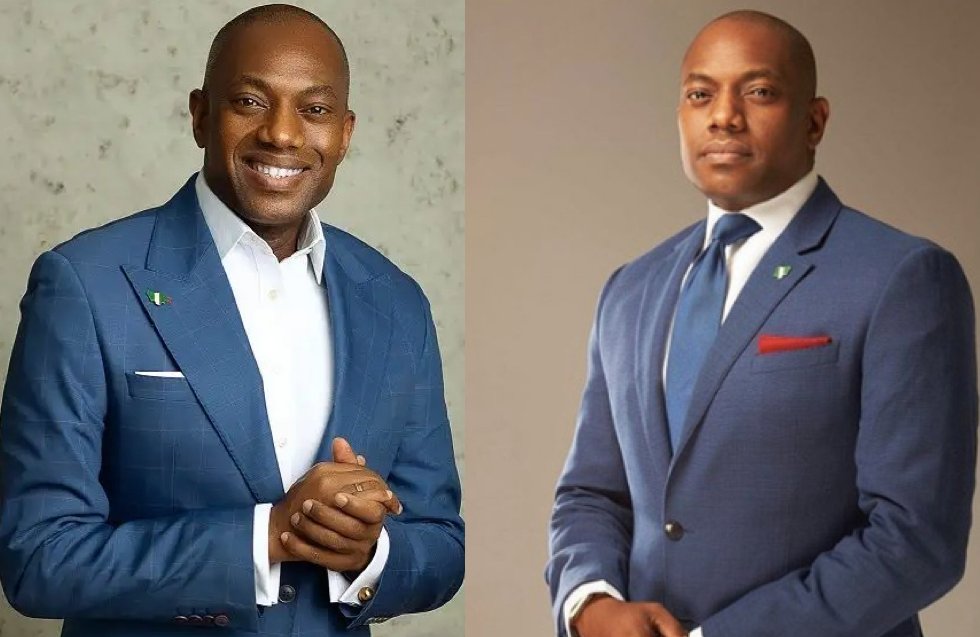
Oge Onubogu biography explores the acclaimed governance expert and Director of the Wilson Center Africa Program who shapes US-Nigeria relations through policy.
Who is Oge Onubogu?
Oge Onubogu is a prominent Nigerian-American governance and democracy expert who currently serves as Director of the Africa Program at the Wilson Center in Washington, D.C.
The Oge Onubogu biography showcases nearly two decades of distinguished work on Africa and US-Africa relations, with particular expertise in conflict resolution, democratic governance, and civil society development across Sub-Saharan Africa. Her career has focused on partnering with African governments, international organisations, civil society groups, academia, and the private sector to strengthen democratic institutions and promote peace.
As of November 2025, Onubogu has emerged as one of the most authoritative voices on Nigerian affairs in U.S. policy circles. Her recent testimony before the House Foreign Affairs Committee on 20 November 2025 regarding the Trump administration’s designation of Nigeria as a “Country of Particular Concern” (CPC) has placed her at the centre of critical debates about religious freedom, security policy, and U.S.-Nigeria relations.
Prior to joining the Wilson Center, Onubogu directed the West Africa Program at the United States Institute of Peace (USIP) from 2015 to 2024, where she led programming across Nigeria, Coastal West Africa, the Lake Chad Basin, and the Gulf of Guinea. Her work has included testifying before the U.S. Congress, advising policymakers, and designing multi-million dollar programmes to mitigate violent conflict.
Growing up in Jos, Nigeria’s Middle Belt region, Onubogu witnessed firsthand the ethnic and religious conflicts that would later define her professional mission. Her personal experience with violence in Nigeria’s Middle Belt informs her nuanced understanding of the country’s complex security challenges.
Oge Onubogu Profile Summary
| Personal Information | Details |
|---|---|
| Full Name | Oge Onubogu |
| Nationality | Nigerian-American |
| Current Position | Director, Africa Program, Wilson Center |
| Previous Position | Director, West Africa Program, USIP (2015-2024) |
| Expertise | Governance, Democracy, Conflict Resolution, US-Africa Relations |
| Geographic Focus | Nigeria, West Africa, Lake Chad Basin, Gulf of Guinea |
| Years of Experience | Nearly 20 years in international development and peace-building |
| Place of Origin | Jos, Plateau State, Nigeria (Middle Belt region) |
| Education | M.A. International Development (Brandeis University); B.A. International and Area Studies (University of Oklahoma) |
| Previous Organisations | National Democratic Institute (NDI), National Endowment for Democracy (NED), World Bank (consultant), Carter Center, International Rescue Committee |
| Congressional Testimony | Multiple appearances before U.S. House Foreign Affairs Committee (2017, 2024, 2025) |
| Recent High-Profile Work | Testimony on Nigeria CPC designation (November 2025), Nigeria elections analysis (2023), farmer-herder conflicts |
| Social Media | @OgeOnubogu (Twitter/X) |
| Based In | Washington, D.C., United States |
Early Life and Background in Jos, Nigeria
Oge Onubogu was born and raised in Jos, Plateau State, located in Nigeria’s Middle Belt region. This geographic detail is crucial to understanding her life’s work.
Growing Up in Nigeria’s Middle Belt
Jos, the capital of Plateau State, has historically been a flashpoint for ethnic and religious tensions in Nigeria. The Middle Belt region sits at the intersection of Nigeria’s predominantly Muslim north and largely Christian south, making it particularly vulnerable to conflicts often framed in religious or ethnic terms.
Onubogu has spoken publicly about her upbringing in Jos and her family’s history in Christian missionary work. Her childhood was marked by witnessing the escalation of farmer-herder conflicts, ethnic clashes, and religious violence that have plagued Plateau State for over two decades.
Personal Experience with Conflict
In her March 2025 congressional testimony, Onubogu revealed: “I grew up in Jos, Plateau state in Nigeria’s Middle-Belt region, and I visit the region regularly, including in December 2024, just a few days before the gruesome Christmas weekend attack that killed an estimated 200 villagers and forced tens of thousands to flee their homes.”
This personal connection to the violence gives her unique credibility when analysing Nigeria’s security challenges. Unlike many policy experts who study conflicts from afar, Onubogu’s insights are shaped by lived experience of the communities most affected.
Family Background
Whilst specific details about her parents and siblings remain private, Onubogu has referenced her family’s involvement in Christian missionary work in Nigeria. This background provides her with intimate knowledge of religious dynamics in Nigeria, even as she advocates for a more nuanced understanding of violence beyond simplistic religious narratives.
Journey to the United States
At some point during her youth or young adulthood, Onubogu relocated to the United States for higher education. This transition from Jos to American universities would set the stage for her career bridging Nigerian and American policy communities.
Education and Academic Foundation
University of Oklahoma (Undergraduate)
Onubogu earned her Bachelor of Arts degree in International and Area Studies from the University of Oklahoma. This interdisciplinary programme provided her with foundational knowledge of global affairs, regional studies, and international relations.
Her undergraduate education equipped her with analytical frameworks for understanding complex political, economic, and social dynamics in different world regions, particularly Africa.
Brandeis University – Heller School (Graduate)
For her graduate studies, Onubogu attended the prestigious Heller School for Social Policy and Management at Brandeis University, where she earned a Master of Arts degree in International Development.
The Heller School is renowned for its focus on social justice, international development, and policy analysis. This rigorous graduate programme deepened Onubogu’s expertise in:
- Development economics and policy
- Programme design and evaluation
- Governance and institutional development
- Conflict analysis and peacebuilding
- Civil society strengthening
Her master’s thesis and coursework likely focused on African development challenges, setting the intellectual foundation for her subsequent career.
Continuing Professional Development
Throughout her career, Onubogu has continued developing expertise through:
- Election observation training with the Carter Center
- Monitoring and evaluation methodologies
- Grant management and portfolio oversight
- Congressional testimony preparation
- Policy analysis and strategic communications
Career Journey: From Refugee Advocacy to Policy Leadership
International Rescue Committee (IRC) – Early Career
Onubogu began her professional journey at the International Rescue Committee (IRC), where she coordinated refugee resettlement programmes in the United States.
Role: She served as a youth advocate for IRC’s refugee resettlement program, overseeing the resettlement of refugee youth from Sudan, Somalia, Sierra Leone, the Democratic Republic of Congo (DRC), and Liberia.
Fellowship: She was a recipient of the American Federation of Teachers/United Federation of Teachers IRC fellowship, through which she developed and coordinated a summer school programme for refugee youth K-12, designing the programme curriculum.
This early experience working directly with displaced populations from African conflict zones gave Onubogu firsthand understanding of the human costs of failed governance and violent conflict.
National Endowment for Democracy (NED) – Program Officer
Onubogu’s next career move took her to the National Endowment for Democracy (NED), where she worked as Program Officer for Anglophone West Africa.
Responsibilities:
- Oversaw democratic governance projects across Nigeria, Sierra Leone, Ghana, and Cameroon
- Managed a multi-million dollar grants portfolio to civil society organisations
- Assessed grant applications and monitored programme implementation
- Built relationships with civil society leaders across West Africa
Geographic Focus: Her work at NED concentrated on English-speaking West African nations, regions where she would continue focusing throughout her career.
Impact: This position gave Onubogu deep knowledge of West African civil society landscape and the challenges facing democracy advocates in the region.
National Democratic Institute (NDI) – Program Manager
From NED, Onubogu moved to the National Democratic Institute (NDI), where she served as Program Manager responsible for multiple African countries.
Geographic Portfolio: She managed citizen engagement, elections, and political party strengthening programmes in:
- Malawi
- Zambia
- Zimbabwe
- Mozambique
- Angola
- Botswana
- South Africa
- Nigeria
Key Responsibilities:
- Coordinated election observation missions across Southern Africa and Nigeria
- Managed governance and legislative strengthening projects
- Provided monitoring and evaluation (M&E) assistance for NDI programmes across Anglophone West Africa
- Conducted research on the oversight functions of African legislatures
- Wrote analytical papers, including one on the budget oversight capacity of the Nigerian legislature
Notable Achievements:
- Served as DC liaison for NDI’s democracy strengthening programmes in Nigeria, Sierra Leone, and Liberia
- Assisted with coordination of the Institute’s 2007 election observation missions to Nigeria and Sierra Leone
At NDI, Onubogu developed expertise in electoral processes, political party development, and legislative strengthening—skills that would prove invaluable in her subsequent roles.
United States Institute of Peace (USIP) – 2015 to 2024
In 2015, Onubogu joined the United States Institute of Peace (USIP), where she would spend nearly a decade building one of the organisation’s most robust country programmes.
Initial Role: Senior Program Officer for Africa Programs, leading programming in Nigeria
Promoted to: Director, West Africa Program
Geographic Scope: Under her leadership, USIP’s West Africa programme expanded to cover:
- Nigeria (primary focus)
- Coastal West Africa
- Lake Chad Basin
- Gulf of Guinea region
Programme Focus Areas:
- Conflict mitigation and prevention
- Civil-military relations
- Community-oriented security
- Inclusion and dialogue initiatives
- Governance and democracy support
Partnership Approach: Onubogu emphasised partnering with:
- African policymakers and government officials
- Civic leaders and community organisations
- Religious and traditional leaders
- Civil society groups
- U.S. government agencies
Major Initiatives:
- Established a Senior Working Group of influential Nigerian civic and religious leaders to address root causes of Boko Haram insurgency and farmer-herder conflicts
- Led programming to mitigate electoral violence during Nigeria’s 2019 and 2023 elections
- Developed community security initiatives in northeast Nigeria affected by Boko Haram insurgency
- Facilitated dialogue between herder and farmer communities in Middle Belt states
Congressional Engagement: At USIP, Onubogu became a regular witness before the U.S. Congress, testifying on:
- Farmer-herder conflicts in Nigeria’s Middle Belt (2017)
- Nigeria’s 2019 and 2023 elections
- Coups in West Africa and ECOWAS’s role
- U.S. policy toward Nigeria
Public Commentary: She became a sought-after expert for media commentary on West African affairs, particularly Nigerian politics and security.
Wilson Center – Director, Africa Program (2024-Present)
In 2024, Onubogu joined the Wilson Center, one of America’s most prestigious think tanks, as Director of the Africa Program.
Institutional Context: The Wilson Center is a non-partisan policy forum established by Congress in 1968 to provide independent analysis and dialogue on global issues. Its Africa Program has been addressing critical issues facing Africa and U.S.-Africa relations for over 20 years.
Responsibilities as Director:
- Leading strategic direction of the Africa Program
- Overseeing research and policy analysis on African affairs
- Convening policymakers, academics, civil society leaders, and business executives
- Testifying before Congress on Africa policy issues
- Publishing policy papers, articles, and analysis
- Organising events, seminars, and conferences on Africa
- Advising U.S. government officials on Africa policy
Thematic Priorities:
- Governance and democracy in Africa
- Conflict prevention and peace-building
- U.S.-Africa relations
- Electoral processes and political transitions
- Security sector reform
- Economic development and trade
Recent Work at Wilson Center:
- March 2025 congressional testimony on conflict and persecution in Nigeria
- November 2025 testimony on Trump’s CPC designation of Nigeria
- Analysis of West Africa’s democratic backsliding
- Commentary on military coups across the Sahel
Oge Onubogu Biography: Congressional Testimonies and Policy Impact
Onubogu has become one of the most frequently invited experts to testify before the U.S. Congress on African affairs.
September 2017: Nigeria’s Farmer-Herder Conflicts
Venue: House Foreign Affairs Subcommittee hearing on “Nigeria: Conflict in the Middle Belt”
Key Points:
- Explained historical context of farmer-herder tensions
- Highlighted environmental drivers including Sahara Desert expansion and Lake Chad shrinkage
- Noted influx of foreign herders from Mali and Niger due to regional conflicts
- Emphasised need for coordinated local, state, national, and regional responses
- Warned that 70% of 500 million illegal small arms in West Africa are in Nigeria
Impact: This testimony helped U.S. policymakers understand the complexity of Middle Belt violence beyond simplistic religious narratives.
February 2019: Nigeria’s 2019 Elections
Context: As Nigeria prepared for critical 2019 presidential and parliamentary elections
Key Messages:
- Emphasised Nigeria’s importance as Africa’s largest democracy and economy
- Noted Nigeria’s projected population growth to 400 million by 2050
- Called attention to the youth bulge (54% under age 20)
- Stressed need for credible elections to maintain democratic stability
Audience: Her analysis reached policymakers through the “On Peace” podcast and congressional briefings.
February 2024: The Future of Freedom in Nigeria
Venue: House Foreign Affairs Committee’s Africa Subcommittee
Timing: Following Nigeria’s controversial 2023 elections and rising insecurity
Focus Areas:
- Democratic backsliding under President Bola Tinubu
- Restrictions on freedom of expression and press
- Electoral irregularities and legitimacy questions
- Rising violence across all regions of Nigeria
March 2025: Conflict and Persecution in Nigeria
Context: Examination of violence in Nigeria and the case for a CPC (Country of Particular Concern) designation
Personal Element: Onubogu drew on her Jos upbringing and recent December 2024 visit just before Christmas attacks that killed 200 villagers
Key Arguments:
- Warned against oversimplifying Nigeria’s violence as purely religious persecution
- Cited Afrobarometer data showing 9 in 10 Nigerians are tolerant of religious/ethnic diversity
- Argued that ethnicity and religion are “instrumental markers” used to mobilise for power and resources
- Emphasised that violence is a symptom of governance failures, not religious conflict per se
- Noted emergence of new terrorist groups like ‘Lukarawa’ in northwestern Nigeria
Quote: “Religious and ethnic violence is a symptom, and the hate speech and conspiracy theories that often drive it are throwing fuel on a fire long ignited by Nigerians’ frustration over what essentially are failures of governance.”
November 2025: Trump’s CPC Designation of Nigeria (Most Recent)
Date: 20 November 2025
Venue: House Subcommittee on Africa hearing
Background: President Trump reinstated Nigeria on the Country of Particular Concern list on 31 October 2025, alleging systematic persecution of Christians and threatening military intervention.
Onubogu’s Position:
- Argued that “labelling insecurity in Nigeria as Christian persecution oversimplifies” a complex situation
- Stated that insecurity stems from “layered governance failures, historical grievances, and social tensions rather than a single religious narrative”
- Strongly warned against U.S. military intervention, stating it “would likely endanger the very Christians it aims to protect” and deepen Nigeria’s religious divisions
- Urged the U.S. to avoid “reactive quick-win actions”
Recommendations:
- Engage with communities of all faiths
- Support moderate leaders
- Tie security assistance to governance reforms
- Work more closely with Nigerian state and local authorities
- Revive a bipartisan U.S. Congressional Caucus on Nigeria
- Call for President Tinubu to appoint a capable Nigerian ambassador to the U.S.
Significance: Her testimony represented a counterpoint to more hawkish voices calling for punitive measures against Nigeria, providing nuanced analysis that complicated simplistic narratives.
Expertise and Areas of Specialisation
Governance and Democracy
Onubogu’s core expertise lies in democratic governance, including:
- Electoral processes and election administration
- Political party development and strengthening
- Legislative oversight and capacity building
- Civic engagement and voter education
- Democratic transitions and consolidation
Conflict Analysis and Peace-building
Her work on conflict focuses on:
- Root cause analysis of violent conflicts
- Farmer-herder conflicts and resource competition
- Ethnic and religious tensions
- Community dialogue and reconciliation
- Early warning systems
- Conflict-sensitive programming
U.S.-Africa Relations
Onubogu specialises in:
- U.S. policy toward Africa
- Strategic partnerships and diplomacy
- Development assistance and aid effectiveness
- Security cooperation
- Democracy and human rights promotion
- Congressional engagement on Africa issues
Civil Society Development
Her expertise includes:
- Civil society capacity building
- Grants management and portfolio oversight
- Civil society-government relations
- Civic space and operating environment
- Coalition building and networking
Nigeria Expertise
As one of America’s foremost Nigeria experts, Onubogu provides analysis on:
- Nigerian politics and governance
- Security challenges (Boko Haram, banditry, IPOB, farmer-herder conflicts)
- Ethnic and religious dynamics
- Electoral processes
- Federal-state relations
- Civil-military relations
- Economic development challenges
Major Publications and Media Commentary
Published Articles and Reports
Whilst comprehensive publication lists are not publicly available, Onubogu has authored or co-authored:
- USIP Peace Briefs on Nigeria and West Africa
- Wilson Center policy papers
- Op-eds in major publications
- Analytical reports on Nigerian elections
- Congressional testimony transcripts (publicly available)
Media Appearances
Onubogu frequently provides expert commentary to:
- International news outlets covering Nigerian affairs
- U.S. media on Africa policy
- Academic conferences and policy forums
- Think tank events and seminars
Podcast and Audio
- Featured expert on USIP’s “On Peace” podcast
- Guest on various policy discussion programmes
Impact and Recognition
Policy Influence
Onubogu’s work has directly influenced:
- U.S. Congressional understanding of Nigerian affairs
- USAID and State Department programming in West Africa
- International community’s approach to Nigerian elections
- Discourse on religious freedom and persecution in Nigeria
Convening Power
Her ability to convene diverse stakeholders—from Nigerian government officials to civil society leaders to U.S. policymakers—has facilitated dialogue that might not otherwise occur.
Building Bridges
As a Nigerian-American, Onubogu serves as a crucial bridge between Nigerian perspectives and U.S. policy communities, bringing authenticity and cultural competence often lacking in Washington policy debates.
Mentorship
Throughout her career, Onubogu has mentored younger professionals entering the field of international development, peace-building, and Africa policy.
Personal Characteristics and Working Style
Nuanced Analysis
Onubogu is known for resisting simplistic narratives, instead insisting on complexity and context in understanding African conflicts.
Evidence-Based Approach
Her recommendations consistently draw on data (such as Afrobarometer surveys), research, and ground-level intelligence rather than ideology.
Empathy and Lived Experience
She brings personal experience of conflict to her professional analysis, lending emotional depth and moral urgency to her policy recommendations.
Partnership Orientation
Rather than imposing solutions, Onubogu emphasises partnering with African actors and elevating local voices.
Congressional Respect
Her repeated invitations to testify before Congress indicate the respect she commands amongst U.S. legislators from both parties.
Current Work and Recent Developments (November 2025)
As of November 2025, Onubogu is actively engaged in:
Trump Administration’s Nigeria Policy
Following Trump’s reinstatement of Nigeria on the CPC list and threats of military intervention, Onubogu has emerged as a leading voice urging caution and nuance. Her 20 November 2025 testimony provided crucial counterweight to more alarmist narratives about “Christian genocide.”
Insecurity Crisis Analysis
She continues monitoring and analysing Nigeria’s multifaceted security crises, including:
- The emergence of the ‘Lukarawa’ terrorist group in northwestern Nigeria (November 2024)
- Ongoing Boko Haram and ISWAP activities in the northeast
- Banditry and kidnapping in the northwest
- IPOB-related violence in the southeast
- Farmer-herder conflicts in the Middle Belt
- Urban crime and kidnapping nationwide
Electoral Support
With local government elections, off-cycle gubernatorial races, and preparations for 2027 general elections, Onubogu’s expertise on Nigerian electoral processes remains in high demand.
Regional Stability
She monitors broader West African trends, including:
- Democratic backsliding across the Sahel
- ECOWAS’s response to military coups
- Regional security cooperation
- Economic integration challenges
Legacy and Continuing Influence
Although still actively working, Onubogu’s impact on U.S.-Nigeria relations and West Africa policy is already significant.
Shaping Policy Discourse
She has helped shift U.S. policy debates about Nigeria away from simplistic religious persecution narratives toward more sophisticated understanding of governance failures as conflict drivers.
Building Institutional Capacity
Through her work at USIP and now the Wilson Center, she has built robust programmes that will continue influencing U.S.-Africa policy for years to come.
Training the Next Generation
Her mentorship of younger professionals ensures her approach to conflict analysis and policy engagement will endure.
Amplifying African Voices
By consistently partnering with African civil society, government officials, and community leaders, Onubogu has created space for African agency in policy discussions too often dominated by Western voices.
Conclusion
Oge Onubogu’s career exemplifies what effective policy expertise looks like in the 21st century. The Oge Onubogu biography reveals a scholar-practitioner who combines rigorous academic training, extensive field experience, deep cultural knowledge, and genuine empathy for conflict-affected communities.
As of November 2025, at a critical juncture in U.S.-Nigeria relations marked by the Trump administration’s CPC designation and military threats, Onubogu’s voice has never been more important. Her 20 November 2025 congressional testimony warning against oversimplification and military intervention represents exactly the kind of nuanced, evidence-based policy analysis that complex crises require.
From her childhood in Jos witnessing ethnic and religious violence, through her refugee resettlement work with the IRC, her democracy support programmes with NED and NDI, her conflict mitigation leadership at USIP, to her current role directing the Wilson Center’s Africa Program, Onubogu has dedicated nearly two decades to strengthening governance, promoting peace, and building bridges between Africa and America.
Her expertise on Nigeria—grounded in lived experience, extensive field work, and rigorous analysis—makes her one of the most authoritative voices on Africa’s most populous nation. Her repeated congressional testimonies demonstrate the respect she commands in Washington policy circles.
As Nigeria faces unprecedented security challenges, democratic backsliding, and economic difficulties, and as the U.S. recalibrates its Africa policy under changing administrations, Oge Onubogu’s continuing work at the Wilson Center will undoubtedly shape how America engages with Nigeria and West Africa in the years ahead.
Her legacy will be measured not just in the programmes she designed or the testimonies she delivered, but in her consistent insistence that Africans must be partners, not subjects, in their own development—and that sustainable peace requires addressing governance failures, not just deploying military solutions.
FAQs About Oge Onubogu Biography
Q1: What is Oge Onubogu’s current position?
Oge Onubogu serves as Director of the Africa Program at the Wilson Center in Washington, D.C., a position she has held since 2024. She previously directed the West Africa Program at USIP from 2015 to 2024.
Q2: Where is Oge Onubogu from originally?
Onubogu grew up in Jos, Plateau State, in Nigeria’s Middle Belt region. She later relocated to the United States for higher education and now works in Washington, D.C.
Q3: What is Oge Onubogu’s educational background?
She holds a Master of Arts in International Development from Brandeis University’s Heller School and a Bachelor of Arts in International and Area Studies from the University of Oklahoma.
Q4: Has Oge Onubogu testified before the U.S. Congress?
Yes, Onubogu has testified multiple times before the U.S. House Foreign Affairs Committee, including in September 2017, February 2024, March 2025, and most recently on 20 November 2025 regarding Nigeria’s CPC designation.
Q5: What is Oge Onubogu’s expertise?
Her primary expertise includes democratic governance, conflict resolution, U.S.-Africa relations, civil society development, and Nigerian politics and security. She has nearly 20 years of experience in international development and peace-building.
Q6: What was Onubogu’s position on Trump’s CPC designation of Nigeria?
In her November 2025 testimony, Onubogu argued that labelling Nigeria’s insecurity as Christian persecution oversimplifies a complex situation. She strongly warned against military intervention, stating it would likely endanger the Christians it aims to protect.
Q7: What organisations has Oge Onubogu worked for?
Throughout her career, she has worked for the International Rescue Committee, National Endowment for Democracy, National Democratic Institute, United States Institute of Peace, and currently the Wilson Center. She has also consulted for the World Bank and Carter Center.
Q8: What is Oge Onubogu’s focus at the Wilson Center?
As Director of the Africa Program, she leads policy analysis and research on African governance, democracy, U.S.-Africa relations, and peace and security issues, with particular focus on Nigeria and West Africa.
Q9: Has Oge Onubogu worked on Nigerian elections?
Yes, throughout her career at NDI, USIP, and the Wilson Center, Onubogu has been extensively involved in supporting democratic elections in Nigeria, including the 2019 and 2023 general elections, providing analysis and facilitating violence prevention efforts.
Q10: What makes Oge Onubogu’s perspective on Nigeria unique?
Her perspective is unique because she grew up in Jos, Nigeria’s conflict-prone Middle Belt region, giving her lived experience of the violence she now analyses professionally. This personal connection, combined with her academic training and policy expertise, provides exceptional authenticity and depth to her analysis.